
For most homeowners, keeping a pool sparkling clean means hours spent skimming, brushing, and vacuuming—only to find debris settling again within days. Manual cleaning is not only time-consuming but frustratingly inconsistent, often missing fine particles that cloud water and compromise hygiene. Enter the pool robot vacuum: an automated, intelligent device designed to handle the hard work while you focus on enjoying your backyard oasis. These robotic cleaners deliver superior cleaning performance, operate with impressive energy efficiency, and require remarkably little effort from the owner. But what exactly makes a robotic pool cleaner the ideal choice over traditional methods? The answer lies in a combination of smart navigation technology, advanced onboard filtration, and thoughtful design tailored to real-world pool conditions. In this article, we’ll explore how these machines work at a technical level, why their filtration systems matter more than most buyers realize, how to select the right model for your specific pool, and the practical steps for setup and ongoing maintenance that keep performance at its peak.
How a Pool Robot Vacuum Works: The Technology Behind the Clean
Unlike traditional pool cleaning methods that depend on your pool’s existing pump and filtration system, a pool robot vacuum operates as a completely self-contained unit. It carries its own motor, filtration, and navigation intelligence—meaning it cleans independently without adding strain to your main pool equipment or requiring booster pumps and dedicated plumbing lines.
At the heart of every robotic cleaner is its navigation system. Modern units use a combination of gyroscopic sensors, accelerometers, and in some cases infrared or sonar scanning to map your pool’s dimensions in real time. Rather than bouncing randomly off walls like older models, today’s robots calculate efficient cleaning paths that ensure full floor and wall coverage with minimal redundancy. Onboard processors track where the unit has already traveled, systematically eliminating missed spots and adapting to obstacles like ladders, steps, and irregular pool shapes.

The cleaning mechanism itself combines powerful suction with rotating scrubbing brushes—typically made of PVC or foam—that loosen algae, biofilm, and stuck-on grime from surfaces before the vacuum intake pulls debris into the onboard filter canister. This dual-action approach achieves a level of cleaning efficiency that passive cleaners simply cannot match, since suction-side cleaners rely solely on your pump’s limited flow rate and pressure-side models merely push debris toward a collection bag without actively scrubbing.
The result is a robotic cleaner that delivers consistent, thorough results every session. It scrubs, vacuums, and filters simultaneously, returning cleaner water to the pool as it works—all without requiring you to adjust valves, monitor hoses, or sacrifice filtration capacity from your primary system.
The Role of Advanced Filtration in Robotic Cleaning Efficiency
Many homeowners focus on suction power when evaluating a robotic cleaner, but filtration is arguably the more critical factor in determining how clean your pool actually becomes. A pool robot vacuum doesn’t just collect visible debris—it processes thousands of gallons of water per cleaning cycle, trapping particles as small as two microns that would otherwise remain suspended and contribute to cloudy, uninviting water. This onboard filtration works independently from your pool’s main filter, meaning the robot actively polishes water quality without taxing your pump or clogging your primary cartridge or sand filter prematurely.
The onboard filter canister sits inside the robot’s body and captures everything from large leaves and twigs to fine silt, pollen, and even algae spores. Because the robot scrubs surfaces loose before vacuuming, it agitates settled particles that your main skimmer would never reach, then immediately traps them before they can re-disperse. This dual benefit—surface cleaning plus water polishing—is what gives robotic cleaners their edge in overall cleaning efficiency. Over weeks of regular use, homeowners typically notice reduced chemical demand and longer intervals between backwashing or replacing their main pool filter, since the robot intercepts the majority of contaminants before they ever reach the primary system.
See also: Emil Kakkis Net Worth: Biotech Innovator’s Wealth Story
Filter Types and Maintenance: Maximizing Your Cleaner’s Performance
Robotic pool cleaners generally use one of two filter styles: fine-mesh cartridges or disposable/reusable filter bags. Cartridge filters excel at capturing ultra-fine particles like sand, dust, and algae, making them ideal for pools surrounded by landscaping or located in windy areas prone to airborne debris. Filter bags, on the other hand, offer larger capacity for bulky debris such as leaves, seed pods, and insects—a better match for pools near trees or during autumn months. Some models include both options, letting you swap based on seasonal conditions.
To maintain peak cleaning efficiency, rinse the filter canister with a garden hose after every cleaning cycle, directing water from the inside out to flush trapped particles from the mesh. Inspect the filter media weekly for tears or stretched seams that allow debris to bypass the screen. Every few months, soak cartridge filters in a mild filter-cleaning solution to dissolve oils, sunscreen residue, and mineral buildup that restrict water flow. Replace filters entirely once you notice permanent discoloration, reduced suction during operation, or visible damage to the mesh structure. Consistent filter care ensures your robot maintains strong water throughput and trapping capability session after session, protecting both water clarity and the longevity of the unit’s internal pump motor.
Choosing the Right Pool Robot Vacuum: A Homeowner’s Guide
Selecting the right pool robot vacuum isn’t simply about picking the most expensive model or the one with the flashiest marketing. The best robotic pool cleaner for your situation depends entirely on your pool’s physical characteristics and how you want to interact with the device day to day. A mismatch between your pool’s demands and your cleaner’s capabilities leads to incomplete coverage, premature wear, and frustration that defeats the purpose of automating maintenance in the first place. The following framework helps you evaluate your specific conditions and match them to the features that actually matter.
Assessing Your Pool: Type, Size, and Surface
Start by honestly evaluating your pool’s shape. Rectangular pools with straight walls and flat floors are the easiest for any robotic cleaner to navigate efficiently, since the unit can follow predictable parallel paths without complex course corrections. Freeform, kidney-shaped, or L-shaped pools present more navigational challenges—curved walls can confuse basic models, causing them to loop in certain areas while neglecting others. If your pool has an irregular shape, prioritize a pool robot vacuum with adaptive mapping technology rather than simple random-bounce navigation.
Size directly impacts cleaning cycle duration. A small plunge pool under 15 feet in length may only need a 60-to-90-minute cycle, while a large backyard pool exceeding 40 feet requires a unit rated for extended run times and longer cable reach. Undersizing your cleaner means it physically cannot complete full coverage before its cycle ends, leaving portions of the floor and walls untouched.
Surface material matters more than many buyers expect. Concrete and pebble-finish pools demand aggressive scrubbing brushes—typically PVC bristles that can dig into textured surfaces without wearing down quickly. Vinyl-lined pools require softer foam or rubber brushes that clean effectively without scratching or tearing the liner. Fiberglass sits somewhere in between, benefiting from moderate-stiffness brushes that remove biofilm without scuffing the gel coat. Choosing a pool cleaner with the wrong brush type risks either inadequate cleaning or surface damage over time.
Key Features to Look For: From Cable Length to Smart Controls
Cable length is the first practical specification to verify. Measure your pool’s longest diagonal distance and add at least 10 feet—this ensures the robot can reach every corner without the cord going taut and pulling the unit off course. Most mid-range models include 50 to 60 feet of cable, which covers pools up to roughly 50 feet in length, but compact models designed for smaller pools may only offer 40 feet.
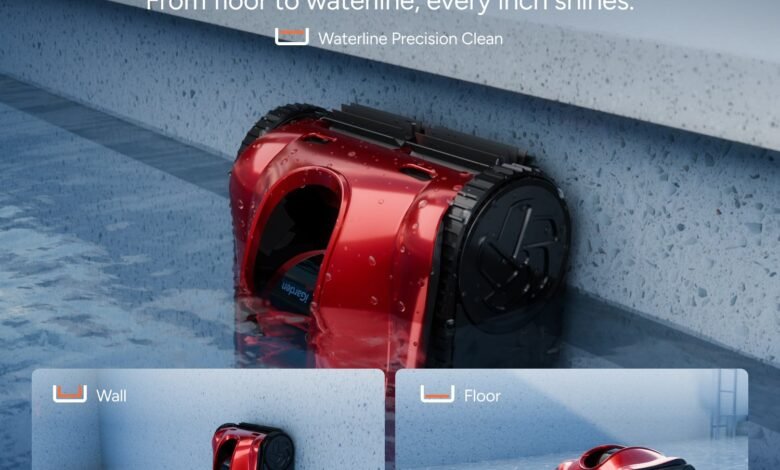
Climbing ability determines whether your robot handles only the floor or also services walls and the waterline, where oils, sunscreen residue, and scum accumulate most visibly. Units with rear-mounted water jets or advanced tread systems can transition from floor to wall seamlessly and even clean the waterline tile—a significant advantage for homeowners who want truly hands-off maintenance. If your pool has a steep wall angle or a raised spa spillover, confirm the model is rated for that gradient.
Cycle timers and programmable scheduling let you set the robot to clean overnight or during off-peak electricity hours without manual intervention. Some units offer multiple cycle lengths—a quick pass for light maintenance between swims and a deep-clean mode for weekly thorough sessions. This flexibility means the robot adapts to your routine rather than demanding you adapt to it.
Smart connectivity through Wi-Fi apps or remote controls adds genuine convenience for homeowners who want to start, stop, or monitor cleaning cycles from anywhere on their property. App-connected models often provide diagnostic alerts for full filter canisters, tangled cables, or stuck wheels, letting you address issues immediately rather than discovering them hours later. While not essential for every buyer, smart controls transform a pool robot vacuum from a simple appliance into an integrated part of your home management ecosystem—much like the smart home solutions offered by brands such as iGarden that aim to streamline outdoor living through connected technology.
Step-by-Step Guide to Using and Maintaining Your Pool Robot Vacuum
Getting your pool robot vacuum up and running requires minimal effort, but following proper procedures from the start ensures reliable performance and extends the unit’s lifespan. Whether you’ve just unboxed a new cleaner or want to refine your existing routine, these practical steps cover everything from initial setup through ongoing care.
Initial Setup and First Run
Begin by assembling the unit according to the manufacturer’s instructions—this typically involves inserting the filter canister, attaching any brush plates, and connecting the floating cable to the power supply. Place the power supply unit on dry ground at least 10 feet from the pool edge, away from potential splash zones and direct sprinkler coverage. Before lowering the robot into the water, hold it at the surface and tilt it slowly to release trapped air from the internal cavity; air pockets cause buoyancy issues that prevent proper wall climbing and floor contact. Submerge the unit completely and let it sink to the bottom before powering on. During the first cycle, observe the robot for five to ten minutes to confirm it navigates smoothly, transitions onto walls without stalling, and doesn’t tangle its cable around ladders or handrails. If tangling occurs, reposition the power supply or use the cable’s swivel joint to reduce twist buildup.
Routine Operation and Best Practices
Schedule cleaning sessions two to three times per week for average-use pools, increasing frequency during heavy swim seasons or after storms that introduce extra debris. After each cycle, remove the robot from the water promptly—prolonged submersion between runs accelerates seal wear and exposes internal components to unnecessary chemical exposure. Rinse the filter canister immediately, inspect the brushes for wrapped hair or string that impedes rotation, and check the drive tracks or wheels for lodged pebbles. Store the unit upright in a shaded area away from direct sunlight, which degrades plastic housings and cable insulation over time. Every month, examine the cable along its full length for nicks or exposed wiring, and lubricate any user-serviceable swivel connections as directed. These simple habits keep your pool robot vacuum performing at factory-level efficiency season after season.
Why a Pool Robot Vacuum Is the Smartest Investment for Effortless Pool Care
A pool robot vacuum earns its place in a homeowner’s routine by solving the fundamental frustrations of manual pool care—inconsistency, wasted time, and the physical effort of scrubbing and skimming. Its autonomous operation means cleaning happens on your schedule without demanding your presence, while intelligent navigation ensures every square foot of floor, wall, and waterline receives attention that manual methods inevitably miss. The advanced onboard filtration system does more than collect debris; it actively polishes water clarity by trapping particles down to the micron level, reducing chemical demand and extending the life of your primary pool equipment in the process. Choosing the right model comes down to honest assessment of your pool’s shape, size, and surface material, then matching those conditions to features like adaptive mapping, appropriate brush types, and sufficient cable reach. Once properly set up and maintained with consistent filter care and smart storage habits, a robotic pool cleaner transforms weekly maintenance from a dreaded chore into a background task you barely think about. The reward is simple: a consistently clean, inviting pool ready for use whenever you are, with minimal effort standing between you and the water.