Caller Database Lookup: 4057242767, 812-402-3294, 8777665220, 415-792-0300, 6022350684, 8664543120, 2073769794, 844-239-7575, 7203560808 & 7408700172

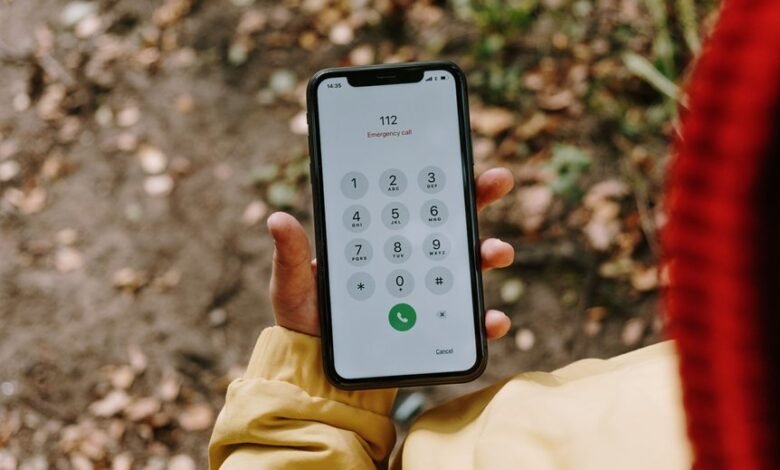
Caller database lookups offer rapid context for numbers like those listed, revealing origin, prior interactions, and potential risk signals. They depend on transparent provenance, recency, and governance to stay reliable. Users should scrutinize data quality, access controls, and disclosure of limits. The balance between utility and privacy is delicate, and missteps can misinform decisions. Consider how patterns, blocks, and red flags are interpreted, then decide what safeguards must accompany any actionable insight.
What Caller Database Lookups Do For You
Caller database lookups provide a rapid verification of caller identity and context. They compile records to illuminate intent, origin, and history, aiding decision making. The approach emphasizes accuracy insights and actionable signals while outlining limits. Privacy safeguards guide data handling, minimization, and consent considerations. Users gain faster judgments with reduced risk, yet remain aware of potential gaps and the need for ongoing verification.
How to Vet a Lookup Tool for Accurate Results
To vet a lookup tool for accurate results, practitioners should first assess the reliability and scope of the underlying data sources, including coverage, recency, and governance.
The evaluation should emphasize transparent privacy safeguards, strict data governance, and auditable provenance.
Operators must disclose data limits, update cadence, and error handling, ensuring reproducible outcomes while preserving user autonomy and cautious decision making.
Interpreting Numbers: Patterns, Blocks, and Red Flags
Interpreting numbers in a caller database requires attention to how patterns emerge, where blocks indicate data gaps, and where red flags signal potential inaccuracies. Analysts identify patterns to watch and assess consistency across sources, while distinguishing plausible anomalies from noise. Caution governs every judgment; not every irregularity warrants action. Informed scrutiny prioritizes patterns to watch, while red flags to ignore questionable noise.
Safe, Responsible Use and Privacy Best Practices
Effective and responsible use of caller data requires clear privacy boundaries, rigorous data handling, and ongoing accountability.
Organizations should implement privacy safeguards that limit exposure, enforce access controls, and audit usage.
Adherence to consent compliance ensures data is used only with authorized permission.
Regular risk assessments and transparent disclosures reinforce trust while enabling freedom to innovate within ethical boundaries.
Frequently Asked Questions
Can These Numbers Be Spoofed or Appear in Multiple Databases?
Spoofing concerns exist; numbers can appear in multiple datasets. Database overlap is possible due to shared public sources. Regional constraints and update frequency affect accuracy; crowdsourcing accuracy varies, necessitating cross-checks for reliable results.
Do Lookups Reveal Subscriber Consent Status or Do-Not-Call Preferences?
Consent status can be revealed selectively; do-not-call preferences are indicated, though disclosures vary by system. A cautious, precise view suggests lookups disclose permitted statuses, guiding compliant use rather than exhaustive subscriber detail or broad access.
Are There Regional Restrictions on Certain Carrier-Number Lookups?
Regional restrictions may affect certain carrier-number lookups; however, the practice relies on data integrity, and database accuracy is essential for lawful use. The cautious reader should verify region-specific rules and consent requirements before proceeding.
How Often Are Lookup Databases Updated and Cached?
Lookup databases update and cache at varying intervals, typically from minutes to hours, depending on provider and data freshness. Two word discussion ideas emphasize lookup freshness, while precision and caution govern release cycles for freedom-minded users.
What Is the Typical Error Rate for Crowd-Sourced Results?
Typical crowd-sourced result error rates vary, often ranging from low single-digit percentages to tens, depending on data source and verification. Consider data reliability and privacy implications; cautious evaluation supports freedom but requires critical scrutiny.
Conclusion
Caller database lookups deliver astonishingly rapid context, weaving origin, intent, and history into a single snapshot. Yet their power is matched by fragility: inaccuracies, stale records, and privacy risks loom if governance is lax. When used with transparent provenance, strict access controls, and ongoing risk disclosures, they enable informed decisions without sensationalism. Vigilant vetting, conservative interpretation, and clear limitations are essential—turning data into prudent guidance rather than unreliable certainty. The result is trustworthy support, not overconfident inference.